
The Mediterranean is one of Europe’s climate-change hotspots, facing more frequent droughts, extreme heat, and unstable rainfall patterns. Soils across the region are often shallow, degraded, and low in organic matter, while farming systems struggle with fragmentation, land abandonment, and an ageing agricultural workforce. Carbon farming is emerging as a vital approach not only to improve soil resilience and mitigate climate change, but also to strengthen broader socio-economic development in rural areas.
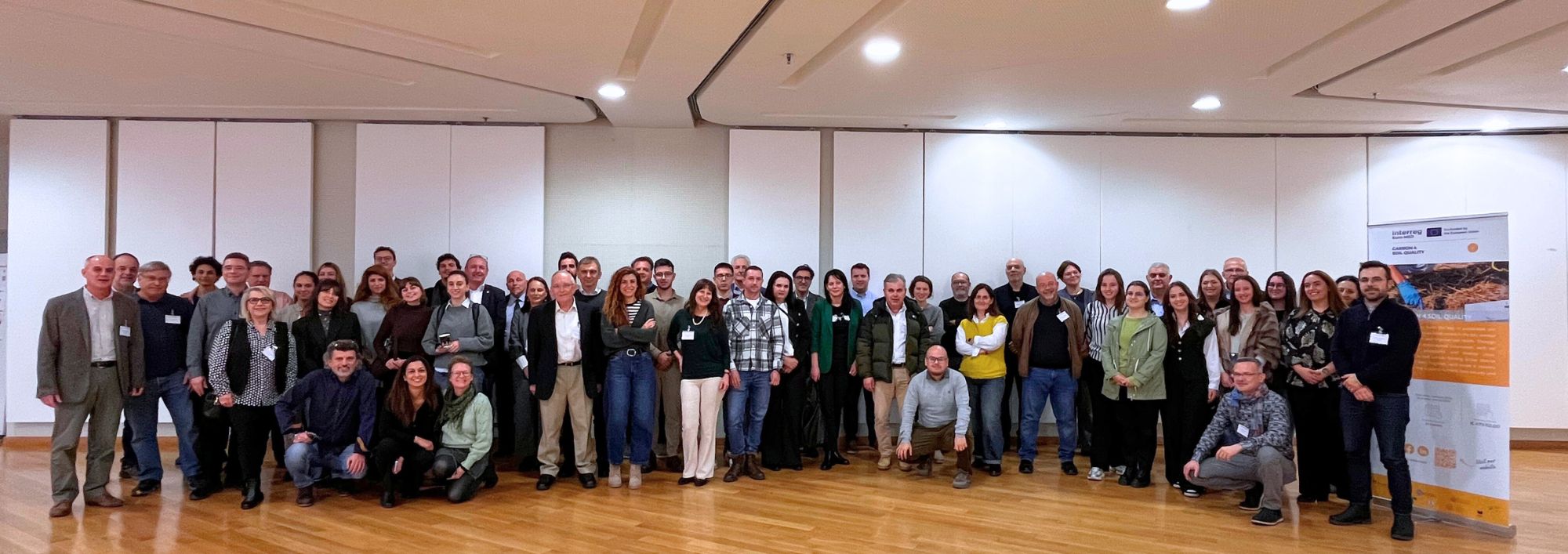
On 10 December 2025, the Carbon for Soil Quality (C4SQ) project held its hybrid international conference in Thessaloniki and online, bringing together researchers, policymakers, advisers, and practitioners from across Europe.
The main challenge of the climate change threat was addressed, as projections show that many areas of Southern and Eastern Europe may fall below 1% soil organic carbon (SOC) by 2100. Such low levels would greatly reduce soil fertility, water retention, and resilience to extreme weather. Without a significant shift towards sustainable soil management and carbon-farming practices, simply maintaining current SOC levels will already become a major achievement.
Keynote speaker Thomas Kätterer from the Swedish University of Agricultural Sciences highlighted the current situation: although carbon sequestration is technically achievable, as demonstrated in Sweden, most European croplands are still primarily focused on slowing carbon losses rather than achieving net gains in the soil. To accelerate progress, carbon farming is essential for storing more CO₂ in soils. This is precisely why the C4SQ project is so timely, as it provides the scientific, technical, and practical foundation for the future testing and implementation of carbon-farming approaches across Mediterranean agriculture.
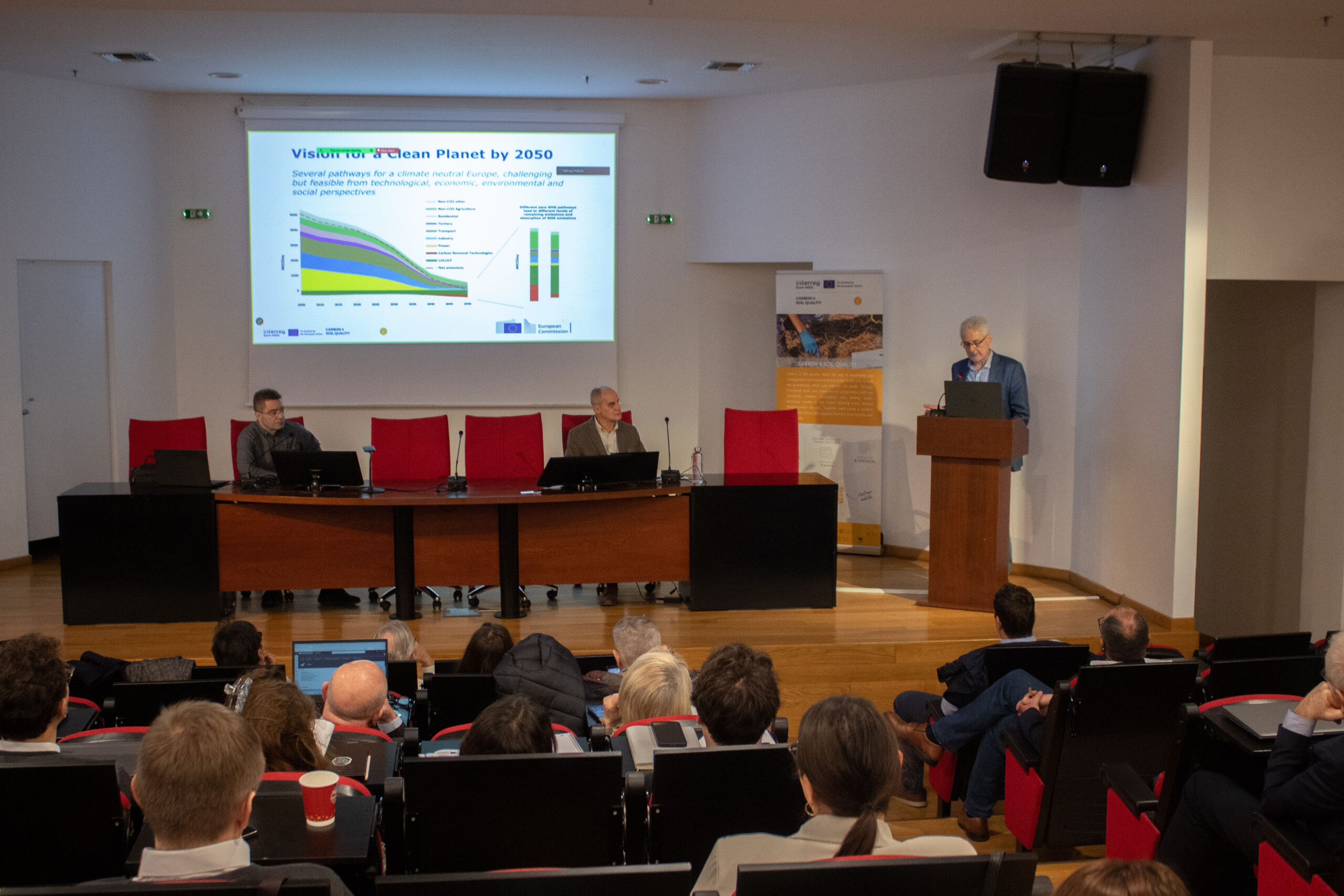
Project partners from Slovenia, Spain, Italy, Greece, Montenegro, and North Macedonia presented the project’s main outcome: the Carbon Farming Toolbox. This includes a catalogue of SOC reference values and soil quality, a methodology for organic carbon analysis, guidelines for carbon farming practices and business collaboration models, and recommendations for carbon credit schemes.
Although EU strategies such as the Green Deal, CAP Strategic Plans, and the CRCF Regulation provide a strong framework, national implementation remains limited. We found that none of the six participating countries has a legal definition of carbon farming, and establishing a national measurement, reporting, and verification (MRV) system for SOC changes remains a significant challenge.
The toolbox offers a pathway and initial steps towards a solution, featuring a Catalogue of SOC reference values and Methodology for organic carbon analysis and soil quality monitoring. Modelling approaches have been adapted to Mediterranean conditions to assess carbon sequestration potential, while the guidelines describe appropriate techniques, including their costs, benefits, and impacts on ecosystem services. However, implementation largely depends on farmers’ ability to manage the high costs of soil testing, equipment, and certification. Awareness of carbon farming remains low, and traditional practices such as deep tillage and residue burning further hinder its adoption, despite increasing interest among younger farmers, NGOs, and researchers.
To help bridge the gap between research and practice, the project developed a set of training materials for farmers and practitioners. A digital brochure, videos, and an online course are covering seven thematic modules, ranging from soil quality and the carbon cycle to selecting appropriate techniques and navigating carbon credits. As many presenters have mentioned, we should now move towards knowledge transfer, which is most effective through demonstration fields, living labs, and hands-on training.
The conference concluded its first part by a presentation of Euro-MED Natural Heritage Mission and Community of Practice, involving more than 200 organisations. Their work supports policy harmonisation, governance innovation, and the mainstreaming of project solutions, including ours, which will be integrated into the Euro-MED Academy.
The second part of the conference featured perspectives from twelve international experts, who discussed best practices, policy, regenerative agriculture, digital modelling tools, and carbon market developments, offering a broad overview of emerging methods and strategies supporting carbon farming across the Euro-Mediterranean region.
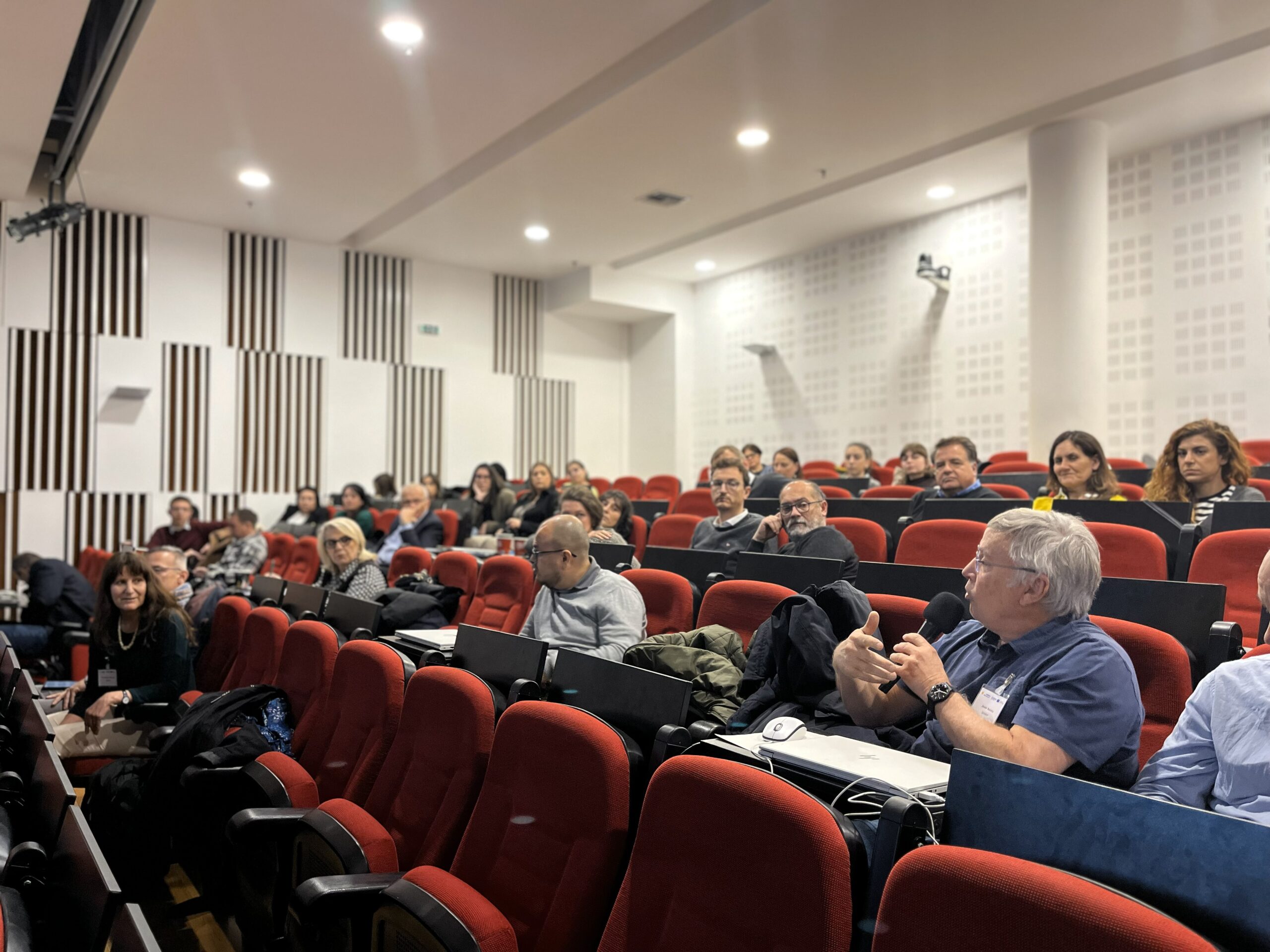
Expert guests of the conference
- Thomas Kätterer, Swedish University of Agricultural Sciences – Soil carbon sequestration for climate change adaptation and mitigation
- Dr. Miguel L. Cabrera, University of Georgia – Mechanisms and rates of C sequestration associated with cover cropping practices
- Dr. Javier Retana, Regenera.cat – A network of regenerative farms in Catalonia: results of their comparison with conventional farms
- Dr. Bettina Fähnrich, Öko-Beratungs Gesellschaft mbH – Carbon Farming – Two years of experience: Trials, results & biological background
- Sheila Darmos, The Southern Lights – Uptake by farmers of carbon sequestration practices in Greece. Case studies, challenges, and pathways
- Dr. Maria Prantsidou, CARBONICA project – Integrating carbon farming practices in the Mediterranean region. Case study of Cyprus pilot sites
- Dr. Panos Panagos, JRC, European Commission – Soil organic carbon stocks in European topsoils
- Dr. Thanos Arampatzis, CARBONICA – Project Overview of the CARBONICA Excellence Hub
- Dr. Carlos Alberto Torres Guerrero, BETA Centre (UVIC) – The CFMED platform for quantifying potential carbon removals. Empowering Mediterranean Carbon Farming Through Digital Innovation and Predictive Tools
- MSci Daphne Kitsou, AUTH/iBEC – Carbonica Excellence Hub: Advancing Carbon Farming Knowledge, MRV Practice and Policy in the Euro-MED Region
- Dr. Giampaolo Sarno, Emilia-Romagna Region – Rural Development in the perspective of Soil Health in Emilia Romagna Region
Downloadable slides of the expert presentation are available on the Final Conference dedicated page HERE.