
What we do
During the study phase, partners assessed regional challenges, reviewed carbon farming practices and developed methodologies and recommendations tailored to Mediterranean conditions. Building on this knowledge, CARBON FOR SOIL QUALITY PLUS now focuses on testing and validating carbon farming across diverse Mediterranean farming systems and environmental conditions. Through pilot activities, monitoring programmes and Carbon Farming Living Labs, the project assesses the environmental and socio-economic impacts of different approaches while supporting knowledge exchange among farmers, researchers, advisors and public authorities. The results will contribute to practical tools, recommendations and strategies that facilitate the wider uptake of carbon farming in the Mediterranean region.
Our cross-border approach leverages the unique strengths and climatic challenges of each partner region, fostering innovation and tailored solutions that are both sustainable and economically viable.
Main Stages of the Test Phase
Testing
Carbon farming practices tested across 7 Mediterranean territories under real-life conditions.
Monitoring
Environmental and soil indicators are monitored to assess the effectiveness of the tested practices.
Living Lab
Farmers, researchers, advisors and policy makers collaborate to validate solutions and share knowledge.
Uptake
Results are translated into tools, training materials and policy recommendations for wider adoption.
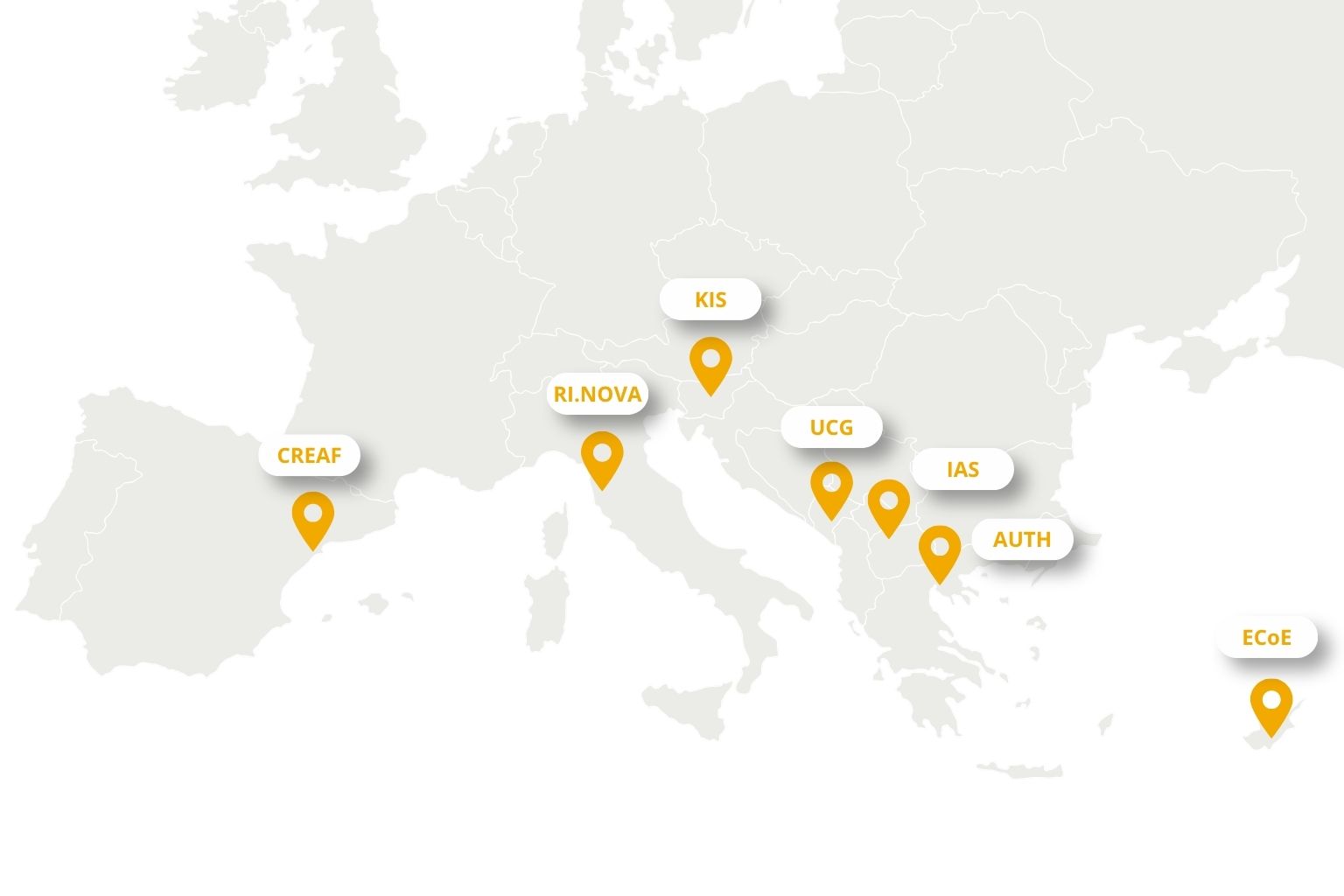
Pilot Territories
At the heart of CARBON FOR SOIL QUALITY PLUS are seven pilot territories representing diverse Mediterranean farming systems and pedo-climatic conditions. These pilot sites provide real-life environments for testing carbon farming practices, comparing results across regions and identifying solutions that can be transferred and scaled up throughout the Mediterranean basin.
From Knowledge to Action
STUDY PHASE: Knowledge generation
- Assess regional challenges
- Review carbon farming practices
- Develop methodologies
- Generate recommendations
TEST PHASE: Real-life validation
- Test practices in pilot territories
- Monitor impacts
- Validate socio-economic models
- Develop tools and strategies